Drain Cleaning
Branch lines and main lines cleared properly, with the method matched to the clog: cable for simple blockages, jetting for buildup.
Learn more →
Slow drains, gurgling pipes, a main line that clogs again every few months: high-pressure water jetting scrubs the line clean instead of just poking a hole through the blockage. Call once and talk it through with a local drain professional.
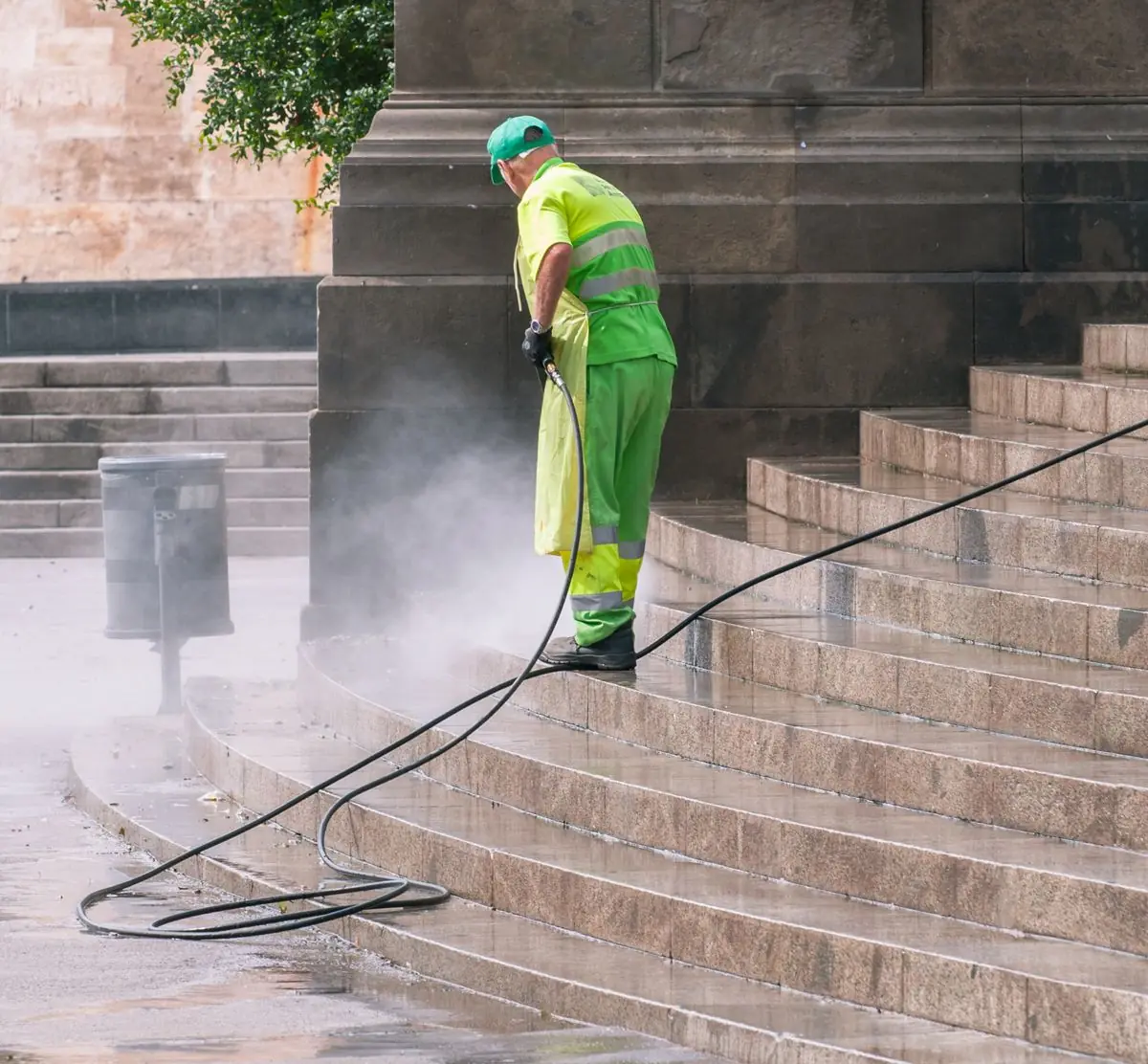
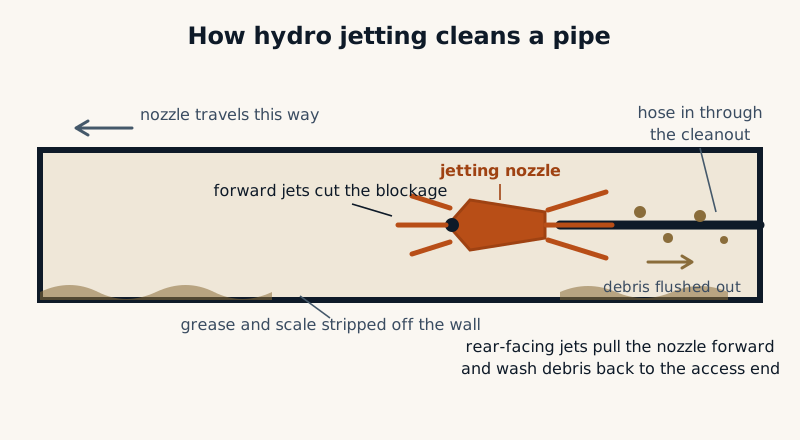
Hydro jetting is the thorough way to clean a drain or sewer line: a professional inserts a hose with a jetting nozzle into the pipe and uses water at high pressure to scour grease, scale, soap, sand and roots off the pipe walls, flushing the debris out to the city sewer.
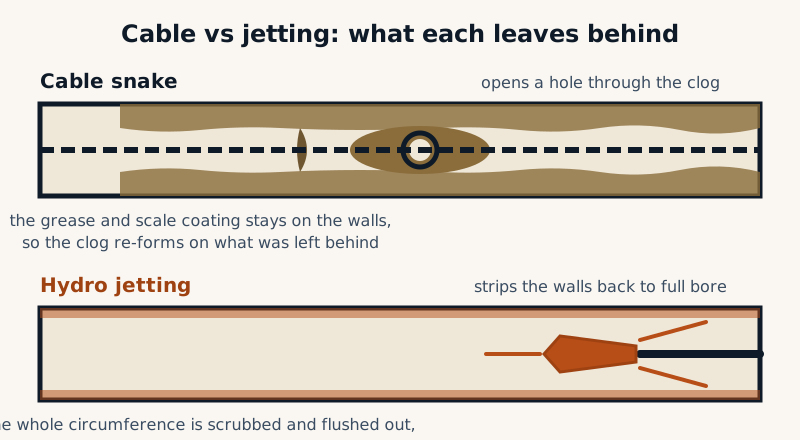
Where a cable snake opens a narrow path through a clog, jetting restores the pipe close to its full original diameter, which is why a jetted line stays clear far longer.
In Bradenton the service earns its keep because of what is inside local pipes. Older homes across the city drain through cast-iron lines that have spent decades corroding into a rough, narrow tube.
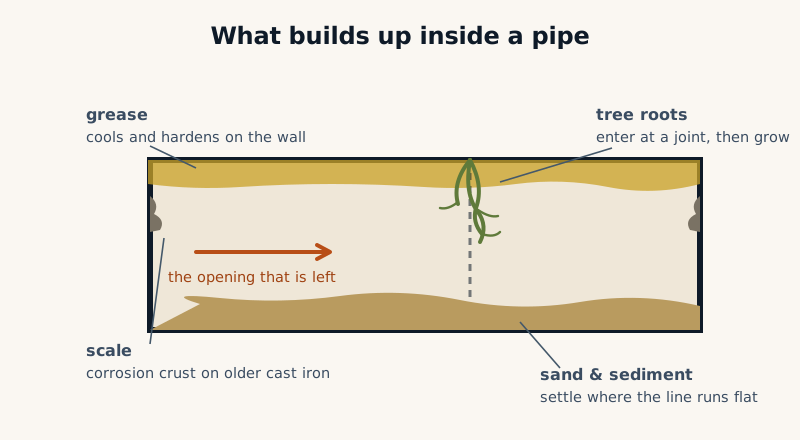
Flat lots and a high water table give those lines very little slope, so heavy material settles instead of washing away. Add root systems from the mature oaks that shade whole streets in West Bradenton and you have the three buildups jetting exists to remove.
When the problem is a single fixture rather than the main line, ordinary drain cleaning is the right-sized fix, and a camera inspection tells you which situation you are in before anyone starts work.
When you call the number on this page, a drain professional who serves Bradenton takes the visit from there. They inspect the line, show you what the camera sees, jet the line clean if cleaning is the answer, and tell you plainly if the pipe itself is the problem.
This page covers the rest: the services available, the symptoms that separate a drain clog from a sewer failure, how jetting works step by step, and the local conditions from Palma Sola to Oneco that decide what your line needs.
Every service below is handled by local Bradenton professionals. Start with the one that matches your symptoms, or call and describe what the drains are doing and you will be pointed the right way.
Branch lines and main lines cleared properly, with the method matched to the clog: cable for simple blockages, jetting for buildup.
Learn more →Targeted repair of the damaged section of a sewer line: cracked, root-split or separated pipe fixed without replacing the whole run.
Learn more →A waterproof camera travels your sewer line so you see the clog, the cracks and the roots yourself before deciding on any fix.
Learn more →The stubborn single drain that keeps clogging: diagnosed to its actual cause and fixed, whether that is the trap, the branch or what is growing in it.
Learn more →When the old line is too far gone to repair in sections: a full new lateral from house to street, pitched and sealed to modern standard.
Learn more →Cured-in-place lining and pipe bursting: a structurally new pipe inside or along the old one's path, without trenching the whole yard.
Learn more →Sewage backing up, every drain in the house stalled: urgent clearing that stops the mess first, then finds the cause so it stays stopped.
Learn more →Restaurants, rentals and multi-unit properties: main lines and grease-loaded drains cleaned on a plan, before they close a business or flood a unit.
Learn more →The scale and tuberculation stripped off the inside of older cast-iron lines, restoring the bore the pipe was built with.
Learn more →Find the symptom you are seeing. Each one points to the service that usually resolves it.
| Symptom | Likely Cause | Where To Start |
|---|---|---|
| Every drain in the house runs slowly | Buildup along the main sewer line, not one fixture | Hydro jetting after a camera inspection |
| One sink or tub is slow, the rest are fine | A clog in that fixture's branch line | Drain cleaning for that branch |
| Toilets gurgle when other fixtures drain | The main line is restricted and air is being pushed back | Camera inspection, then jetting |
| Water backs up into the lowest tub or shower | Main line blockage; sewage takes the lowest exit | Emergency drain cleaning |
| The same clog returns weeks after snaking | The cable punched a hole; the buildup is still on the walls | Hydro jetting the full line |
| Sewage smell in the yard or near the house | A cracked line or a saturated backup near the surface | Sewer line repair assessment |
| A patch of lawn is greener and softer than the rest | A leaking sewer line fertilizing and watering one spot | Camera inspection to locate it |
| Several rental units share the same slow drains | A building main that carries more than it was sized for | Commercial drain cleaning |
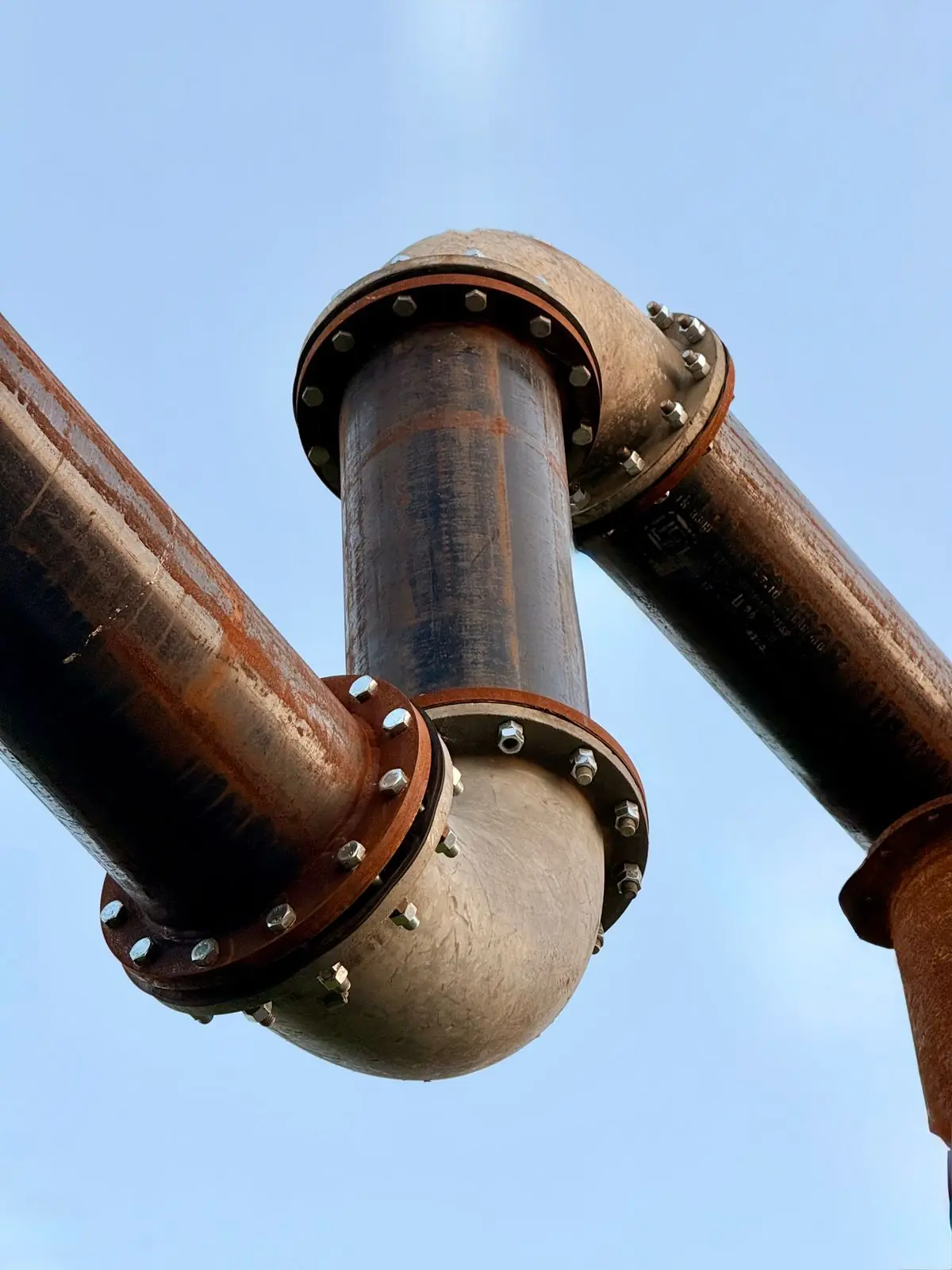
A large share of Bradenton's homes, the postwar ranches of Bayshore Gardens, the older streets of Oneco, the bungalows near downtown, were plumbed with cast-iron drain lines. Cast iron is strong and quiet, but it corrodes from the inside.
Decades of corrosion produce a rough, pitted surface called scaling, and the effective opening of the pipe shrinks year by year. Grease that would slide through smooth PVC catches on that roughness, then catches more grease.
By the time a cast-iron line is fifty or sixty years old, a cable snake may pass through the middle while most of the bore is still lined with buildup.
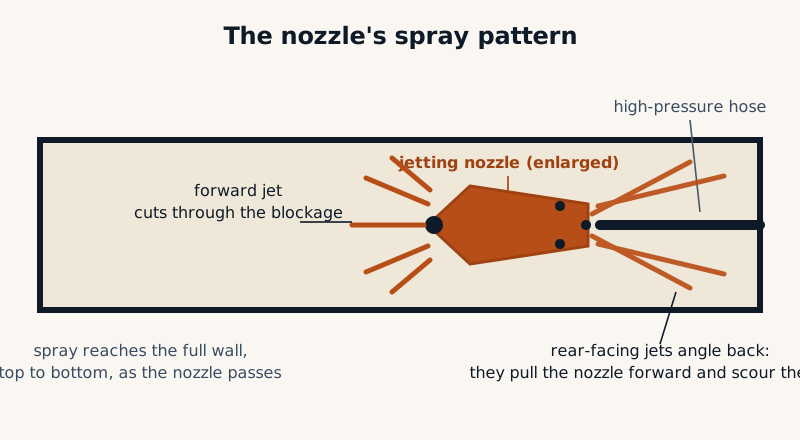
Jetting is the counter to exactly this failure mode. The nozzle's rear jets drive it through the line while its forward and side jets strip the scale and grease crust off the walls, and the water flow carries the debris out.
On a structurally sound cast-iron line, the result is close to the pipe's original capacity. On a line whose iron has thinned to cracking, the camera inspection that precedes jetting shows the truth first, and the conversation changes from cleaning to repair while the evidence is on the screen.
Bradenton sits low and flat between the Manatee River and the Gulf, and its water table is never far below the surface.
Drain lines here were laid with the minimum fall the terrain allowed, so wastewater moves slower than it would on a hillside lot, and sand, sediment and grease settle in the low spots instead of flushing through.
Then the summer storm pattern arrives: hurricane-season downpours can push groundwater up around the pipes and test every joint.
A line that is half narrowed by buildup copes in dry weather and backs up in the first heavy rain, which is why so many Bradenton drain calls come in the wet months even though the buildup took years to form.
The snake, or drain auger, is a steel cable with a cutting or boring head. It is the right tool for a hair clog in a bathroom branch or a single obstructed fixture, and it is fast.
Its limit is geometry: the head is narrower than the pipe, so through a main line it bores a tunnel through the blockage and leaves the wall coating intact. Flow returns, briefly, until the tunnel's soft edges collapse and re-clog, sometimes within weeks.
Jetting trades a little setup time for completeness: the whole circumference is scrubbed, the debris is flushed out rather than pushed aside, and a camera pass afterward verifies the line is genuinely clear. For recurring main-line clogs, jetting is usually the point where the cycle of repeat calls ends.
Each fixture drains through a small branch line into a larger stack or horizontal run. Those runs join the building drain under or beside the house, which exits through the foundation to become the sewer lateral, the pipe crossing your yard to the city main at the street.
A cleanout is the capped access point, usually in the yard or at the base of a stack, that lets a pro insert a camera or jetter hose without removing a toilet.
Knowing which segment is misbehaving is the whole diagnostic game: a branch problem stays in one room, a lateral problem announces itself in every room at once, and the cleanout is where the answer is found.
Honesty about limits matters here. Jetting cannot repair a pipe that has collapsed, separated at a joint, or bellied into a sag that holds water permanently. It cannot stop roots from re-entering a cracked joint, though it removes the roots that are there.
And on severely corroded iron, it cleans what remains without adding back the metal that rust took.
Those cases belong to sewer line repair, trenchless rehabilitation or sewer line replacement, and a professional who scopes first will show you which case is yours on the camera screen rather than asking you to take it on faith.
Tell us which drains are slow or backed up, how long it has been going on, and whether it is one fixture or the whole house.
A drain professional who serves your part of Bradenton takes the visit from there, and schedules it with you directly.
The pro runs a camera to see the line's condition, then jets it clean and verifies the result with a second look.
You see what the camera saw. If the pipe needs more than cleaning, the options and the evidence are laid out before you decide.
Honest quotes reflect the line, not a flat guess.
The factors a professional weighs are the length of line being jetted, whether access is through a proper cleanout or requires pulling a fixture, how heavy the buildup is (a grease-narrowed kitchen line and a root-filled lateral are different afternoons), whether the pipe's condition limits pressure, and how many branch lines are included beyond the main.
A short, accessible main with moderate buildup is a simple visit; a 90-foot cast-iron lateral under a South Bradenton ranch, packed with roots at three joints, is a bigger one.
Ask the pro to show you the camera findings behind the scope so you can see exactly what the quote is based on.
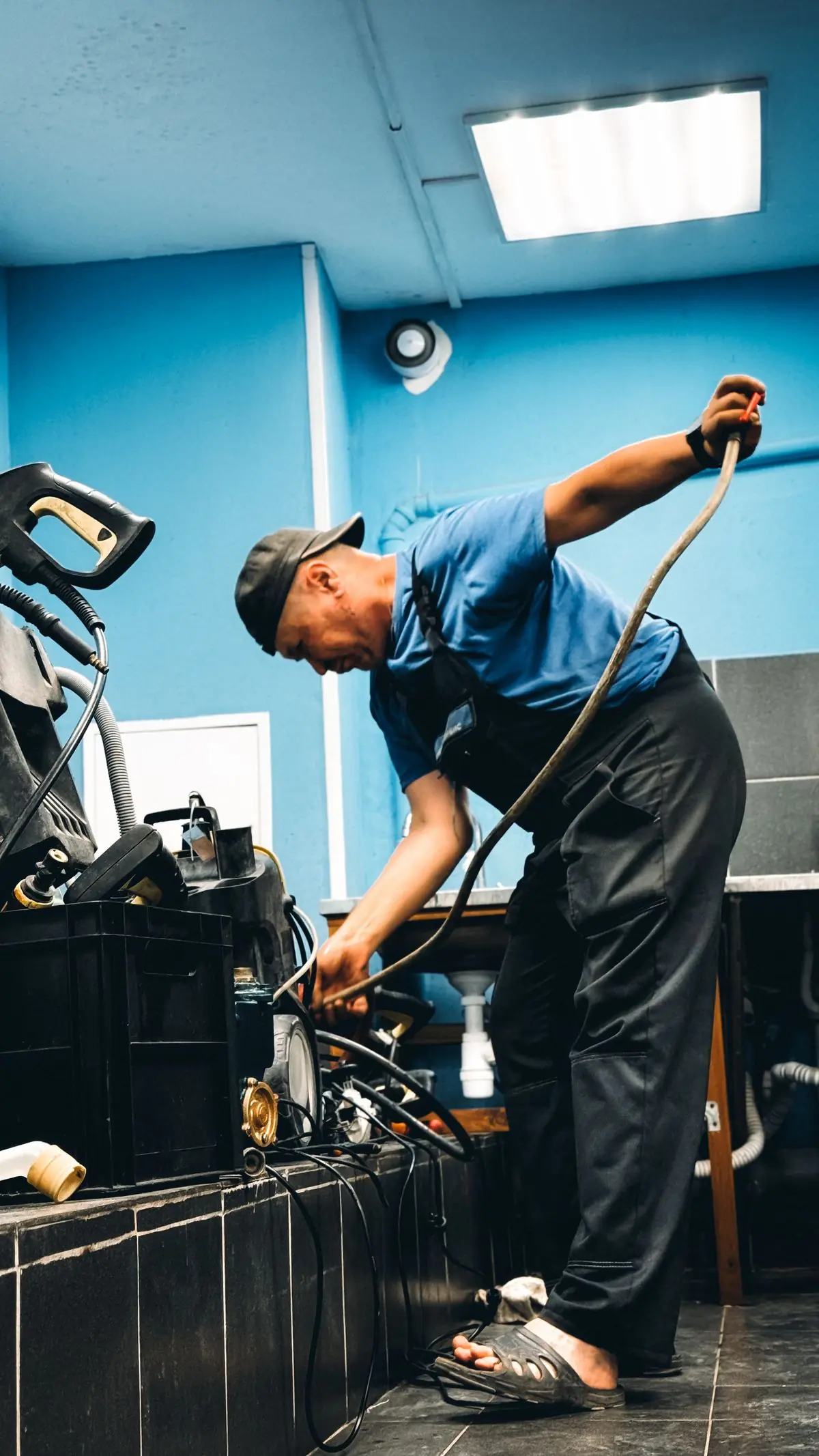
Small consumer jetters and rental snakes exist, and for a hair clog in a sink trap they are reasonable. Main-line work is different territory.
A professional jetter delivers pressures a consumer unit cannot approach, and, more importantly, the pro reads the camera first: jetting blind into a collapsed or separated pipe can force water out of the break and into the soil around it, turning a repair into an excavation.
The other DIY hazard is the cable itself, which can bind and whip in a large line. If your problem is one fixture, the clogged drain page is the right place to start; if the whole house is involved, the inspection-first professional route is the practical one.
Bradenton is not one housing stock. A 1950s ranch in Bayshore Gardens, a waterfront home in Palma Sola and an older Oneco house load their drain lines very differently. These area pages explain what pros see in each.
The established streets west of downtown along Manatee Avenue: older ranches and bungalows under big oaks, with some of the city's oldest sewer laterals.
Learn more →The peninsula between Palma Sola Bay and the Manatee River: waterfront and near-water homes where the water table sits close under every pipe.
Learn more →The 1950s-60s subdivision off Bayshore Gardens Parkway: small ranches on original cast-iron drains that are reaching the decision age together.
Learn more →The 14th Street West and 53rd Avenue corridors: older homes, duplexes and small multi-unit buildings whose drains carry a working neighborhood's load.
Learn more →Bradenton's historic southeast community around 15th Street East and SR 70: older small homes, deep roots in the city, and drains as old as the streets.
Learn more →Outside these areas but still in Bradenton or nearby Manatee County? Call anyway. The pros on these rounds cover the Bradenton area across its main residential ZIP codes, including 34203, 34205, 34207, 34208, 34209, 34210 and 34212.
Hydro jetting is drain cleaning with water under high pressure. A professional feeds a hose with a specialized nozzle into your drain or sewer line; rear-facing jets pull the nozzle forward while forward jets blast grease, scale, sand and roots off the pipe walls, and the flow carries everything downstream.
Unlike a cable snake, which mostly pokes a hole through a blockage, jetting scrubs the full inside of the pipe, which is why the results last longer.
If one fixture drains slowly, a targeted drain cleaning of that branch line usually handles it. If several fixtures are slow, drains gurgle, or the same main line keeps clogging after snaking, the buildup is in the main line and jetting is the appropriate tool.
A camera inspection settles the question before money is spent on the wrong fix.
Three local reasons stack up. Much of Bradenton's older housing has cast-iron drain lines that corrode and roughen inside with age, giving grease and scale something to grab.
The terrain is flat with a high water table, so lines have little natural fall and anything heavy settles instead of flushing through. And mature oak and palm roots find the joints of older pipe and grow straight into the flow.
Jetting addresses all three buildups; it cannot fix a pipe that has physically collapsed.
Done by a professional who has inspected the line first, jetting is the cleaning method of choice for cast iron because it removes the scale that is narrowing the pipe without grinding the walls the way some mechanical tools can.
The honest limit: if the iron has corroded through or a section has caved in, no cleaning restores it, and the camera will show that before the jetter starts. That is why reputable pros scope first on older Bradenton homes.
Multiple slow drains at once, gurgling from toilets when a tub drains, sewage odor in the yard, water backing up into the lowest shower or tub, and a wet or unusually green patch of lawn along the line's path.
One slow sink is a drain issue; a house full of symptoms is a sewer line issue.
For a typical residential main line, the jetting itself is often an hour or two of work once access through a cleanout is established, with the camera check before and after adding some time. Homes without an accessible cleanout, or lines with heavy root masses, take longer.
Your pro can give a realistic window after the inspection.
Yes, roots are one of its best uses: the jet cuts and flushes root masses that a cable only pushes aside. The limit is regrowth.
Roots return through the same joint they entered, so jetting buys a long clear interval, but a line with chronic root entry eventually argues for a trenchless repair or a sectional replacement that removes the entry points.
It does, and Bradenton has thousands of seasonal homes. Water sitting unused lets grease and sediment settle and harden in low spots, and traps can dry out and let sewer gas in.
Many seasonal owners have the main line jetted and camera-checked when they arrive for the season, which turns an unpleasant surprise into a scheduled hour of maintenance.
Then cleaning stops being the answer and the conversation moves to repair: a sectional sewer line repair, a trenchless rehabilitation, or a full sewer line replacement if the damage runs the length of the line.
You will see the footage yourself, and the options come with the locations and lengths measured, so the quote rests on evidence.
There is no flat figure that survives contact with a real pipe, because the scope depends on the line's length, its access, how heavy the buildup is and what the camera finds.
What you can expect is a quote built from those findings, explained before any work starts, rather than a number invented over the phone. The sections below list the factors a professional weighs on a Bradenton line.
Call now and describe what your drains are doing. A local drain professional will inspect your line, explain what they find and quote the fix.
Call (941) 344-0204