Trenchless Sewer Repair
Cured-in-place lining and pipe bursting: a structurally new pipe inside or along the old one's path, without trenching the whole yard.
Learn more →
When the old line is too far gone to repair in sections: a full new lateral from house to street, pitched and sealed to modern standard. Call (941) 344-0204 to talk it through with a local drain professional.
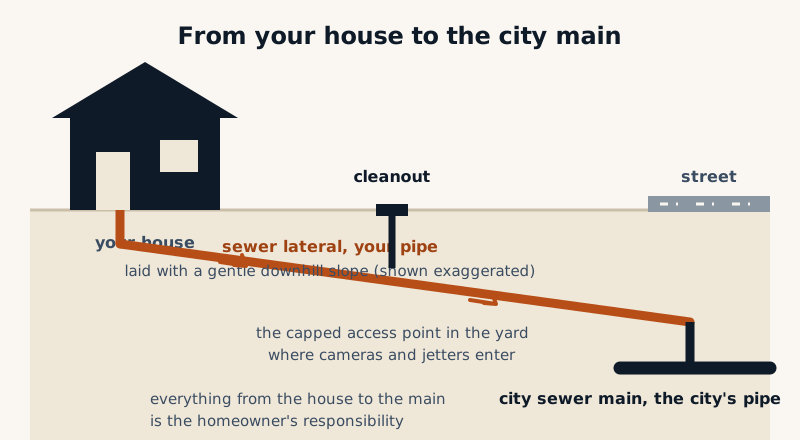
Sewer line replacement is the complete job: the old lateral, the buried pipe running from your home to the city sewer at the street, is taken out of service entirely and a new line is installed in its place.
It is the right call when a line has failed along its length rather than at one spot: cast iron corroded through in several places, clay pipe cracked at joint after joint, or a line so bellied and broken that cleaning and patching have stopped being honest options.
If you are deciding between sewer line replacement and a bigger fix, the overview of hydro jetting services in Bradenton explains how cleaning, inspection and repair fit together, and the sections below cover sewer line replacement in the depth you need before you call.
Replacement is the biggest decision in drain work, so it starts with proof: a full camera inspection of the entire run, house to street, with findings measured and recorded. You see the same footage the quote is based on.
If the damage turns out to be one repairable section, you will be told that instead and pointed to sectional repair; replacement is recommended when the evidence along the whole line supports it, not before.
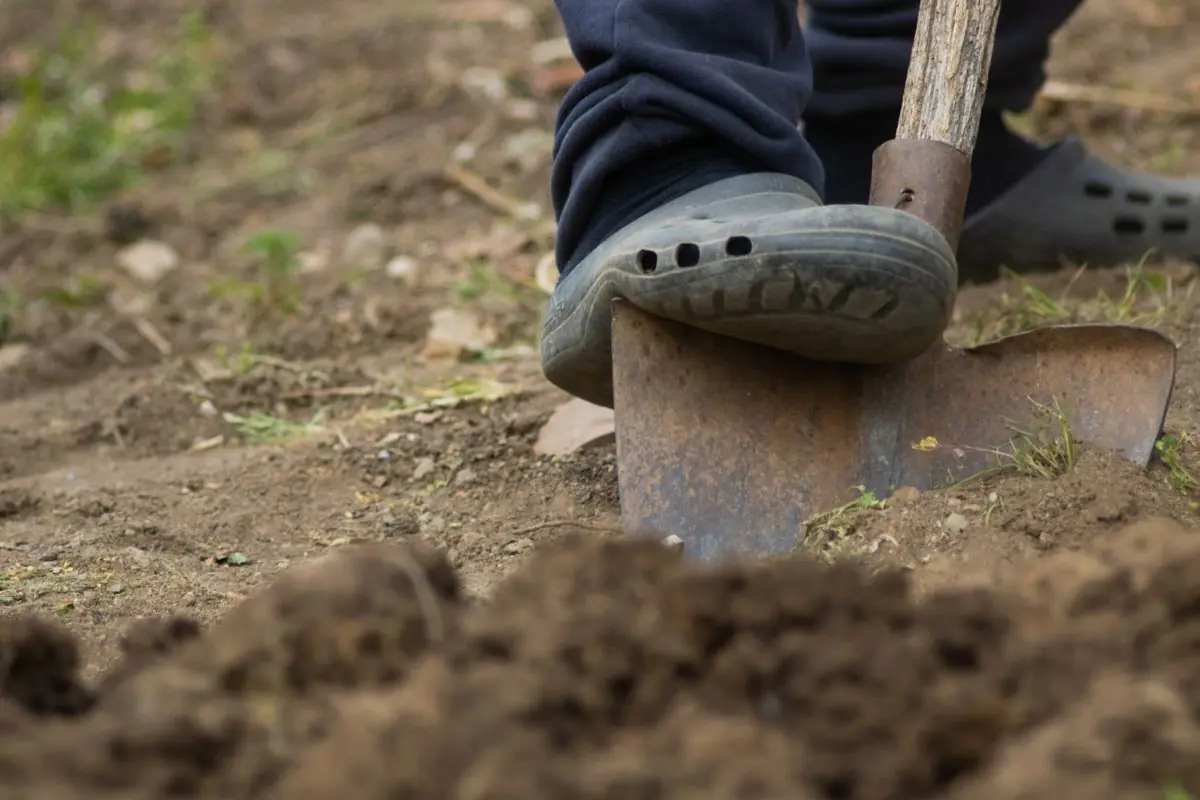
The traditional method excavates along the old line's path, removes the failed pipe and lays new PVC on a prepared bed at the correct slope, with sealed joints and a proper connection at the house and at the city tap.
Open trench suits lines in open yard and cases where the old pipe has collapsed completely, since the new line is built under direct eyes. The route is chosen to respect driveways, trees and structures wherever the line's path allows.
On suitable lines, replacement can be done with far less digging: pipe bursting pulls a new pipe through the old one's path while fracturing the old pipe outward, using access pits at each end.
Where the old line is intact enough to host a liner instead, trenchless rehabilitation may achieve the goal without replacement at all. Your pro compares the methods against your line's condition, depth and obstacles, and prices the realistic ones.
The clearest signals that sewer line replacement belongs on your list:
Replacement is justified by pattern, not by one frightening frame of video. If your signs cluster in the plural, sections, years, joints, you are reading the pattern correctly.
Lines reach replacement age by accumulation. Cast iron corrodes from inside for fifty-plus years until the bottom of the pipe is a channel of rust.
Clay pipe, common in Bradenton's older districts, is durable in itself but its many short sections mean many joints, and joints are where roots enter and soil shifts pry them apart.
Orangeburg, a fiber pipe used in some postwar construction, simply deforms and blisters with age until it cannot hold a round shape. Under all of it, sandy soil moves: a line that loses its bedding loses its slope, and a line without slope collects the solids that finish it.
Replacement waves move through Bradenton by decade, the way its neighborhoods were built. The postwar tracts are reaching the end of their cast-iron and clay lines together, and streets where three homes have replaced laterals in two years are telling their neighbors something actuarial.
Local pros also plan around the water table: excavation here meets groundwater sooner than in most cities, and an experienced crew prices and sequences the digging with that reality in hand rather than discovering it mid-trench.
If your street is having its replacement season, your camera footage will usually confirm that your line has kept the neighborhood's schedule.
Replacement decisions deserve paperwork, and you can assemble yours. Collect every drain invoice, camera report and repair record you have; a pattern of spending spread over years is itself evidence.
Watch whether backups now happen in dry weather as well as wet, a sign the line's capacity is structurally gone rather than weather-related. Walk the line's path for sinking soil or persistent wet spots and photograph them with dates.
Then get the full-length camera footage before agreeing to anything, and feel entitled to a second opinion on a job of this size; a reputable pro expects it.
The replacement process runs in stages you can follow. First the camera survey and surface locating map the line and its depth. Then the method is chosen, trench, bursting or lining, and the scope is written with its restoration terms.
The work itself is scheduled with utility locates marked, the old line taken out of service, the new one laid or pulled, connections made, and flow tested.
The finish is verification: a camera pass through the new line and your yard restored as agreed, with the footage kept in your home records.
Replacement quotes are the sum of the line, the method and the surface above it. The components are:
| Factor | How It Affects The Job |
|---|---|
| Length and depth | The lateral's full run is being replaced, so its footage and burial depth set the base scope. |
| Method | Open trench, pipe bursting and lining price differently in labor, equipment and restoration. |
| What the line runs under | Lawn is one thing; driveways, lanais, mature trees and a street crossing are another. |
| Material being replaced | Removing collapsed or contaminated old pipe adds handling to the job. |
| Connections and permits | House and city-tap connections, inspection and permitting are part of a proper replacement. |
| Restoration | Soil, sod, pavers or concrete returned to finish condition, as scoped in writing. |
On a job this size, get the method, the footage and the restoration terms in one written scope. Those three items are what make two replacement quotes honestly comparable.
A deteriorated line can be scheduled work right up until it cannot. Call promptly if sewage is surfacing, backing into living spaces, or the ground over the line is caving in, because soil loss around a broken pipe accelerates.
Those situations get stabilized first, and the replacement planning follows with the camera evidence gathered during the emergency visit.
Many residential laterals are replaced in one to a few days depending on method, length and what the line runs under. Trenchless methods shorten the surface disruption considerably. Your estimate should lay out the sequence day by day rather than a single vague window.
Usually not. Water use is limited during the hours the line is open, and the crew will tell you exactly when. Most homeowners stay home through a replacement; the inconvenience is measured in hours of no drainage, not days away.
PVC is the modern standard precisely for its longevity: it does not corrode, its joints are sealed against roots, and manufacturers rate it for many decades of service.
Laid at correct slope on a proper bed, it is realistically the last sewer line the house will need for a generation or more.
Sometimes the suggestion is really about one bad section, and the footage is how you tell. Ask to see failures along the whole line, not one dramatic frame.
If the damage is genuinely distributed, replacement is the honest spend; if it is local, go with sewer line repair and keep the footage as your baseline.
It is fractured outward into the surrounding soil as the new pipe is pulled through its path. Nothing is left in service, and nothing needs to be hauled away. The method needs a line that still has a passable path, which the camera survey confirms.
A trenched route is visible while it heals and then returns to lawn. Bursting and lining leave only the access pits' footprints. Agree the restoration standard in writing, sod, seed, paver relaying, before work starts, and photograph the yard's condition with the crew on day one.
With a new line in the ground, do two small things. Keep the post-installation camera footage with your closing papers; it is the birth certificate of the pipe and the first thing a future buyer or pro will want.
And note the new line's path on a simple sketch of your lot while the memory is fresh. Digging projects for the next thirty years will thank you for that one page.
Cured-in-place lining and pipe bursting: a structurally new pipe inside or along the old one's path, without trenching the whole yard.
Learn more →Targeted repair of the damaged section of a sewer line: cracked, root-split or separated pipe fixed without replacing the whole run.
Learn more →The scale and tuberculation stripped off the inside of older cast-iron lines, restoring the bore the pipe was built with.
Learn more →Sewer Line Replacement is available across Bradenton, including West Bradenton Palma Sola Bayshore Gardens and the rest of the full Bradenton service footprint.
Replacement is the end of a road that starts with cleaning and looking; the homepage lays out that jetting-first sequence in full.
Call now and describe what your drains are doing. A drain professional who serves Bradenton will take it from there: inspect, explain, and quote the fix.
Call (941) 344-0204